News
As a leading manufacturer of high-precision clamping systems for CNC machine tools in China, we provide product solutions for the CNC machine tool industry.
KURATA TOOLS - Leading Manufacturer of High Precision Clamping Systems. Discover How We Help




As a leading manufacturer of high-precision clamping systems for CNC machine tools in China, we provide product solutions for the CNC machine tool industry.
2026-07-18 10:25:47
A Hydraulic Tool Holder works by using hydraulic pressure generated inside the holder body to securely clamp a cutting tool with high precision. Unlike traditional mechanical collet chucks, a hydraulic tool holder uses a sealed hydraulic chamber to distribute clamping force evenly around the tool shank.
When the clamping screw is tightened, hydraulic pressure is created inside the holder. This pressure causes the internal sleeve to contract uniformly around the cutting tool, providing a 360° gripping force. This unique Hydraulic Clamping System reduces tool runout, minimizes vibration, and improves machining accuracy during CNC operations.
Because of its excellent stability and precision, Hydraulic Tool Holders are widely used in high-speed milling, drilling, mold manufacturing, aerospace machining, and other applications requiring reliable CNC tooling performance.
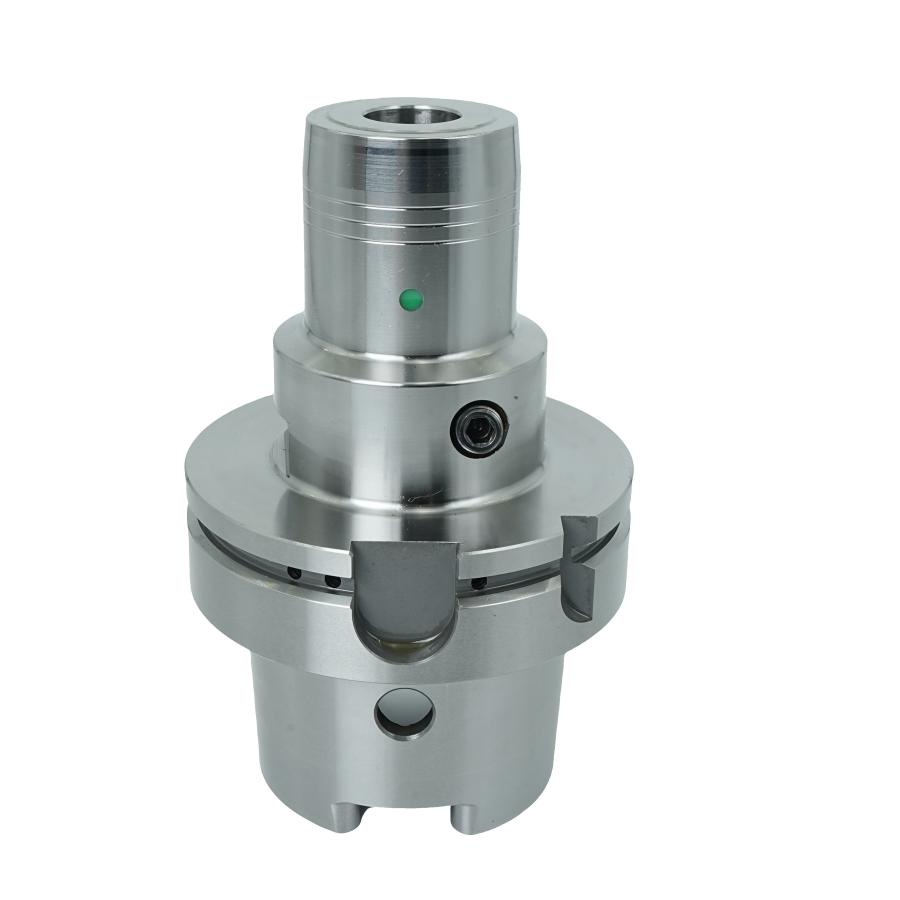
The working principle of a hydraulic tool holder is based on hydraulic pressure transmission.
Inside the holder body, there is a sealed hydraulic chamber filled with a special hydraulic medium. When pressure is applied, the hydraulic medium transfers force evenly around the tool shank.
The basic working process includes:
Tool insertion
Hydraulic pressure generation
Uniform tool clamping
Stable cutting performance
Compared with mechanical clamping methods, the hydraulic system provides a more balanced force distribution, which improves tool positioning accuracy and machining reliability.
A Hydraulic Clamping System works by converting mechanical tightening force into hydraulic pressure.
The process can be divided into four steps:
The cutting tool, such as an end mill, drill, or reamer, is inserted into the precision bore of the hydraulic holder.
The tool shank must match the holder size to ensure proper contact and accurate positioning.
The operator uses an Allen key to tighten the clamping screw located on the holder body.
The screw pushes against the internal hydraulic chamber, increasing the pressure of the hydraulic medium.
Unlike traditional mechanical holders, the force is not concentrated at specific contact points.
The increased hydraulic pressure expands the internal sleeve evenly around the cutting tool.
This creates a uniform 360-degree grip around the tool shank.
The result is:
Improved concentricity
Lower runout
Reduced tool movement
Better cutting stability
After clamping, the hydraulic tool holder keeps the cutting tool securely positioned during rotation.
The balanced clamping force helps reduce:
Tool vibration
Chatter marks
Cutting instability
Premature tool wear
This allows CNC machines to achieve higher accuracy and better surface finishes.
One of the biggest advantages of hydraulic tool holders is their excellent vibration damping capability.
During CNC Machining, cutting forces can cause tool vibration, especially during:
High-speed milling
Deep cavity machining
Long tool extension applications
The hydraulic medium inside the holder absorbs part of these vibrations and helps maintain stable tool positioning.
Compared with standard collet chucks, hydraulic holders provide:
Better vibration control
Improved surface quality
Longer tool life
More consistent machining results
Machining accuracy depends heavily on tool stability and positioning precision.
A hydraulic tool holder improves CNC accuracy through:
The hydraulic pressure surrounds the tool shank evenly, preventing uneven gripping force.
This improves tool alignment and reduces tool deflection.
Tool runout refers to the amount of deviation when the cutting tool rotates.
A high-quality hydraulic holder can achieve runout accuracy within 3 μm, helping maintain precise cutting conditions.
Lower runout provides:
Better dimensional accuracy
Improved surface finish
Reduced cutting tool wear
The strong and balanced grip between the hydraulic holder and cutting tool improves overall system rigidity.
This is especially important for precision CNC machining applications.
Understanding the difference between hydraulic and mechanical clamping systems helps explain why hydraulic holders are widely adopted in modern machining.
A mechanical collet chuck uses physical deformation of the collet to grip the cutting tool.
Advantages:
Simple structure
Lower cost
Suitable for general machining
Limitations:
Uneven clamping force
Higher runout
More vibration during high-speed machining
A hydraulic tool holder uses fluid pressure for precision clamping.
Advantages:
360° uniform gripping
Lower runout
Better vibration damping
Faster tool changes
Improved machining consistency
For precision CNC applications, hydraulic holders provide more stable performance.
A hydraulic tool holder mainly consists of several key components:
The main structure provides strength and connection with the CNC spindle.
Common interfaces include:
BT Hydraulic Tool Holder
CAT40 Hydraulic Tool Holder
The sealed chamber contains hydraulic fluid and generates pressure during clamping.
It is the core component of the Hydraulic Clamping System.
The clamping screw controls hydraulic pressure and allows quick tool installation and removal.
The precision-machined bore holds the cutting tool with high accuracy and ensures proper alignment.
KURATA Tools specializes in the R&D, production, and sales of high-precision clamping systems for CNC machine tools.
E-mail:sales@kuratatools.com