News
As a leading manufacturer of high-precision clamping systems for CNC machine tools in China, we provide product solutions for the CNC machine tool industry.
KURATA TOOLS - Leading Manufacturer of High Precision Clamping Systems. Discover How We Help




As a leading manufacturer of high-precision clamping systems for CNC machine tools in China, we provide product solutions for the CNC machine tool industry.
2026-06-06 11:06:40
In modern CNC Machining, achieving high precision, excellent surface finish, and reliable tool clamping is essential for productivity and quality. One of the most popular solutions for precision machining is the Hydraulic Tool Holder, also known as a hydraulic chuck or hydro chuck.
This article explains what a hydraulic tool holder is, what a CNC tool holder is, and how does a hydraulic tool holder work, while covering the advantages, applications, and differences between hydraulic and milling chucks.
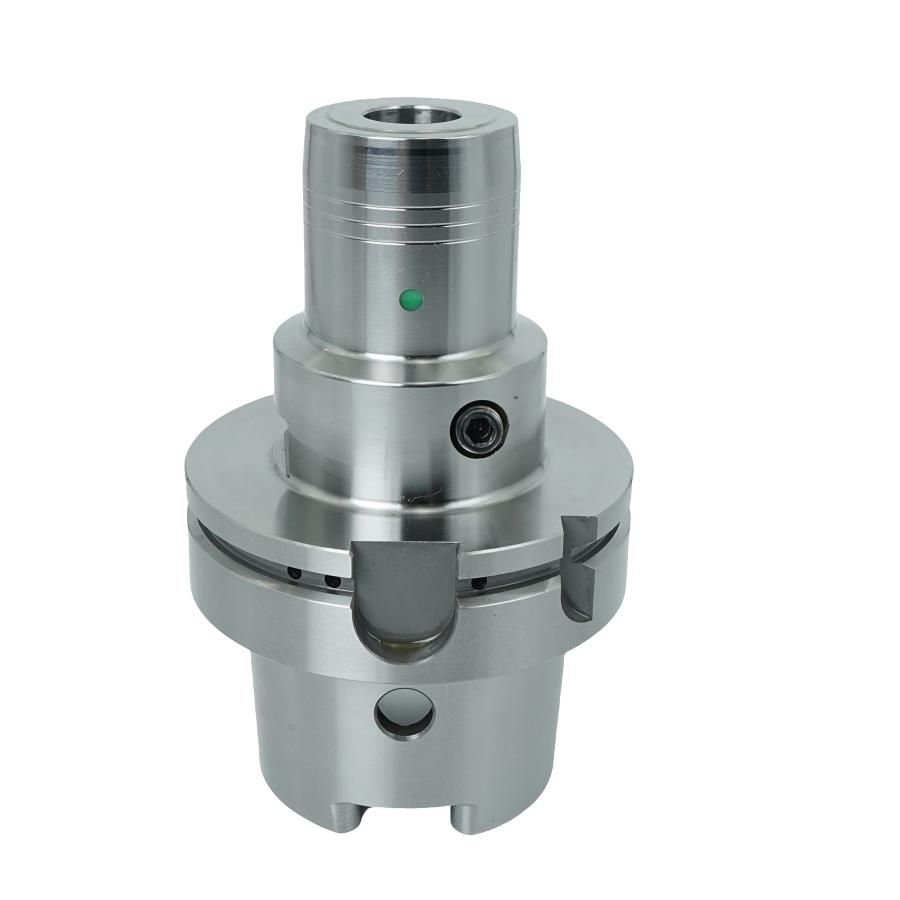
A CNC tool holder is a device that securely connects a cutting tool to the spindle of a CNC machine. It plays a critical role in transmitting torque, maintaining concentricity, and ensuring machining accuracy.
Tool holders are commonly used in:
CNC milling machines
Vertical machining centers (VMC)
Horizontal machining centers
CNC lathes
High-speed machining equipment
Common types of CNC tool holders include:
Collet chucks
Milling chucks
Shrink-fit holders
Drill chucks
The performance of the tool holder directly affects machining precision, tool life, and surface quality.
A hydraulic tool holder is a precision tool-clamping system that uses hydraulic pressure to grip the cutting tool.
Unlike mechanical clamping systems, hydraulic holders utilize an internal chamber filled with hydraulic fluid. When a clamping screw is tightened, pressure is applied to the hydraulic medium, causing the internal sleeve to contract uniformly around the tool shank.
This creates:
High clamping force
Excellent runout accuracy
Vibration damping
Longer tool life
Improved surface finish
Because of these advantages, hydraulic tool holders are widely used in precision milling, drilling, reaming, and finishing operations.
A hydraulic chuck is another name for a hydraulic tool holder. The terms hydraulic chuck, hydraulic tool holder, hydraulic holder, and hydro chuck are often used interchangeably in the machining industry.
A hydraulic milling chuck is specifically designed for milling applications and provides superior tool stability compared to standard holders.
A typical hydraulic chuck mechanism consists of:
Tool holder body
Hydraulic fluid chamber
Expansion sleeve
Clamping screw
Precision bore
These components work together to provide uniform clamping pressure around the cutting tool.
Many machinists ask: How does a hydraulic chuck work?
The working principle is based on hydraulic pressure transmission.
The cutting tool is inserted into the precision bore of the hydraulic chuck.
The operator tightens a clamping screw located on the holder.
As the screw is tightened, pressure is applied to the sealed hydraulic fluid inside the holder.
This creates controlled hydraulic chuck pressure within the internal chamber.
The hydraulic fluid transfers force evenly around the expansion sleeve, causing it to contract and grip the tool shank uniformly.
The resulting hydraulic chuck clamping pressure secures the tool with exceptional accuracy.
The hydraulic system absorbs vibration and minimizes runout during operation, improving machining quality.
A simplified hydraulic chuck diagram typically includes:
Clamping Screw
       ↓
Hydraulic Fluid Chamber
       ↓
Expansion Sleeve
       ↓
Cutting Tool Shank
The hydraulic fluid distributes pressure evenly around the sleeve, ensuring concentric and secure tool clamping.
When people ask how does a hydraulic tool holder work or how do hydraulic tool holders work, the answer lies in hydraulic force transmission.
Unlike mechanical collet systems that clamp at specific points, hydraulic holders create 360-degree uniform pressure around the tool shank.
Benefits include:
Consistent gripping force
Reduced tool runout
Improved cutting stability
Less vibration
Better surface finish
This makes hydraulic systems ideal for high-precision machining operations.
The hydraulic chuck working principle offers several important benefits.
Most high precision hydraulic chucks achieve runout accuracy of less than 3 μm at specified measuring distances.
The hydraulic fluid acts as a natural vibration absorber.
Benefits include:
Reduced chatter
Improved surface finish
Increased tool life
Tool installation requires only a simple tightening operation.
Hydraulic pressure provides uniform clamping regardless of operator variation.
Stable cutting conditions produce smoother machined surfaces.
Hydraulic chuck pressure is generated internally when the clamping screw compresses the hydraulic medium.
The pressure is distributed evenly around the expansion sleeve.
The resulting hydraulic chuck clamping pressure determines how securely the cutting tool is held during machining.
Proper clamping pressure helps prevent:
Tool slippage
Excessive vibration
Premature tool wear
Dimensional inaccuracies
A common question is milling chuck vs hydraulic chuck.
Advantages:
Higher torque transmission
Suitable for heavy cutting
Strong gripping force
Disadvantages:
Higher runout
Less vibration damping
Advantages:
Higher precision
Better runout control
Excellent vibration absorption
Improved surface finish
Disadvantages:
Generally lower torque capacity than milling chucks
For heavy roughing operations, a milling chuck may be preferred.
For finishing, precision milling, drilling, and reaming, hydraulic milling chucks often provide superior results.
Many machinists also ask how does a milling chuck work.
A milling chuck uses mechanical clamping through rollers or needle-bearing mechanisms that tighten around the tool shank when the nut is tightened.
Unlike hydraulic holders, clamping force is generated mechanically rather than hydraulically.
This provides excellent torque transmission but typically less vibration damping.
A hydraulic chuck for VMC (Vertical Machining Center) is widely used in industries requiring high precision.
Applications include:
Aerospace components
Automotive parts
Medical devices
Mold and die manufacturing
Precision engineering
Hydraulic holders help maximize machining accuracy and productivity in VMC environments.
Common applications include:
Precision milling
High-speed machining
Drilling
Reaming
Finishing operations
Mold manufacturing
Aerospace machining
Medical component production
Because of their accuracy and vibration-damping properties, hydraulic tool holders are often chosen for demanding machining tasks.
A hydraulic tool holder or hydraulic chuck is a high-precision CNC tool clamping system that uses hydraulic pressure to securely hold cutting tools. Understanding how does a hydraulic chuck work and how do hydraulic tool holders work helps manufacturers select the right tooling solution for their machining needs.
Compared with conventional holders, high precision hydraulic chucks offer excellent runout accuracy, vibration damping, improved surface finish, and extended tool life. Whether used in a CNC machining center or as a hydraulic chuck for VMC, hydraulic holders remain one of the most effective solutions for precision machining applications.
KURATA Tools specializes in the R&D, production, and sales of high-precision clamping systems for CNC machine tools.
E-mail:sales@kuratatools.com